How Much Sugar Is in Your Creami Ice Cream?
This post contains affiliate links. If you make a purchase through these links, we may earn a small commission at no extra cost to you.
How Much Sugar Is Actually in Your Pint?
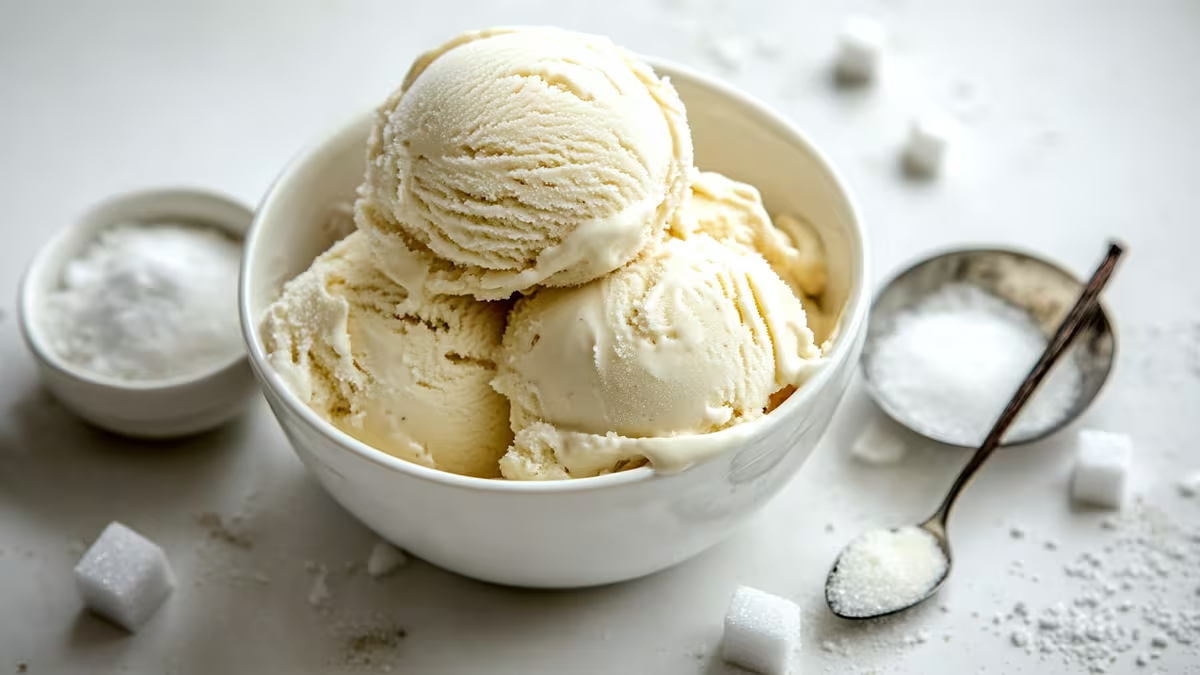
A standard Creami vanilla ice cream recipe uses about 1/3 cup (67 grams) of granulated sugar for an entire 16-ounce pint. That pint contains roughly 4 servings, which means each serving has about 17 grams of sugar.
That number means nothing in isolation, so here is how it compares to what you would buy at the store:
| Ice Cream | Sugar per serving |
|---|---|
| Ben & Jerry's Vanilla | 23g |
| Häagen-Dazs Vanilla | 21g |
| Baskin-Robbins Vanilla | 22g |
| Creami Vanilla (standard) | 17g |
| Breyers Natural Vanilla | 14g |
| Halo Top Vanilla | 5g |
| Creami Vanilla (allulose) | 0g |
Even with full sugar, your homemade Creami ice cream contains less sugar per serving than most premium commercial brands. This is because commercial ice cream often contains corn syrup, dextrose, and other sweeteners in addition to sugar to improve shelf stability and prevent ice crystal formation during shipping and storage. Your Creami ice cream does not need those extras because it is processed and eaten fresh.
Why Sugar Matters for Texture
Sugar is not just about sweetness in ice cream. It plays a critical role in texture that many people do not realize until they try to reduce it.
Sugar Depresses the Freezing Point
Sugar lowers the temperature at which water freezes. In ice cream, this means that a portion of the water in your base remains unfrozen even at freezer temperatures, creating a softer, more scoopable texture. Remove the sugar and the base freezes completely solid, becoming hard and icy.
This is why very low-sugar ice cream needs more Re-Spins in the Creami. The blade has to work harder to break up the additional ice crystals that form when there is not enough sugar to keep part of the water liquid.
Sugar Prevents Large Ice Crystals
Sugar molecules interfere with ice crystal formation. In a sugared base, ice crystals remain small and evenly distributed, which your tongue perceives as smooth and creamy. In a base without enough sugar, ice crystals grow larger and clump together, creating that grainy, icy texture that nobody wants.
Sugar Adds Body
Sugar contributes to the viscosity of the base. A base with adequate sugar is thicker, which helps it freeze more evenly and process into a more uniform texture. Remove the sugar and the base is thinner, which can lead to uneven freezing.
How Much Sugar You Actually Need
The Creami works well across a range of sugar levels. Here is what to expect at each level:
Full Sugar: 1/3 Cup (67g) per Pint
The default amount in most recipes. Produces the best texture, the most scoopable result, and the sweetness level most people expect from ice cream. This is where you should start if you are new to the Creami. Once you know what full-sugar Creami ice cream tastes and feels like, you can adjust downward from there.
Reduced Sugar: 1/4 Cup (50g) per Pint
A 25% reduction that most people cannot detect by taste alone. The ice cream is very slightly firmer and may benefit from one extra Re-Spin, but the texture difference is minimal. If you want to cut sugar without any noticeable compromise, this is the sweet spot. Most recipes on eatcreami work perfectly at this level.
Low Sugar: 2 Tablespoons (25g) per Pint
A 60% reduction. At this level, you will notice the ice cream is firmer and slightly icier than a full-sugar version. It needs 1-2 Re-Spins and benefits from adding a tablespoon of cream cheese to compensate for the lost body. The sweetness level is subtle, closer to lightly sweetened frozen yogurt than ice cream. Some people prefer this level, especially for fruit-forward flavors where you want the fruit to be the star.
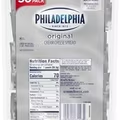 Philadelphia Original Cream CheeseThe go-to stabilizer for smoother, denser Creami ice cream
View on Amazon →
Minimal Sugar: 1 Tablespoon (13g) per Pint
Close to unsweetened. The texture suffers noticeably, the ice cream is hard and icy without significant help from fat (full-fat cream) and stabilizers (cream cheese). This level works best with high-fat bases and strong flavors like dark chocolate or espresso that provide their own perceived sweetness. Plan for 2-3 Re-Spins and expect to let the pint sit at room temperature for 5+ minutes before scooping.
Zero Sugar: Allulose Substitution
Allulose is a rare sugar that tastes like sugar, behaves like sugar in ice cream (depresses freezing point, prevents ice crystals), but is not metabolized by the body and contains essentially zero effective calories. Replacing sugar 1:1 with allulose produces Creami ice cream that is virtually identical in texture and taste to the full-sugar version. It is the closest thing to a free lunch in nutrition.
The catch is cost. Allulose is significantly more expensive than sugar, roughly 3-4 times the price per cup. But for people who are managing blood sugar, following a keto diet, or simply want to eliminate sugar without compromise, allulose is the single best option available.
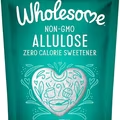 Wholesome AlluloseBehaves like sugar when frozen with 90% fewer calories
View on Amazon →
Other Sweetener Options
Honey
Honey works well in the Creami but behaves differently than sugar. It is sweeter than sugar by weight (use about 75% as much), it is a liquid which slightly increases the water content of your base, and it adds a distinctive honey flavor that not everyone wants in every recipe. Honey is excellent in yogurt bases, fruit sorbets, and recipes where honey flavor is welcome. Use 3 tablespoons of honey in place of 1/3 cup of sugar.
Maple Syrup
Similar to honey in that it is liquid, slightly sweeter than sugar, and adds its own flavor. Maple syrup is wonderful in fall-flavored recipes (pumpkin, apple, pecan) and breakfast-inspired bases. Use the same 3-tablespoon substitution as honey.
Monk Fruit Sweetener
Monk fruit blends (usually monk fruit extract mixed with erythritol) provide zero-calorie sweetness but do not depress the freezing point like sugar does. This means monk fruit-sweetened ice cream freezes harder and is icier than sugar-sweetened versions. Add a tablespoon of cream cheese and plan for extra Re-Spins. The taste is close to sugar but some people detect a slight cooling aftertaste from the erythritol.
Stevia
Stevia works for sweetness but has the same freezing-point problem as monk fruit. It also has a noticeable aftertaste that becomes more prominent when frozen. We recommend stevia only in recipes with strong flavors (chocolate, peanut butter, coffee) that mask the aftertaste.
Coconut Sugar
A 1:1 substitute for granulated sugar with a slightly lower glycemic index. It adds a mild caramel flavor and produces slightly darker ice cream. Texture is essentially identical to regular sugar. A good option for people who want a more natural sweetener without changing behavior in the recipe.
Hidden Sugar Sources in Creami Recipes
Condensed Milk
Sweetened condensed milk is roughly 55% sugar by weight. A recipe that uses 1/4 cup of condensed milk is adding about 30 grams of sugar. This is one of the reasons condensed milk produces such excellent Creami texture — all that sugar is depressing the freezing point and preventing ice crystals. Be aware of this if you are tracking sugar intake.
 Eagle Brand Sweetened Condensed MilkSweetener and stabilizer in one for luxuriously creamy texture
View on Amazon →
Flavored Yogurt
A single-serve cup of flavored Greek yogurt (the kind you might pour straight into a pint for the one-ingredient trick) contains 12-20 grams of added sugar depending on the brand. Check the label if this matters to you.
Fruit
A cup of mango puree contains about 23 grams of natural sugar. A cup of strawberry puree contains about 7 grams. Fruit sugar is metabolized the same way as added sugar from a blood glucose perspective, so count it if you are counting. From a nutrition perspective, fruit also brings fiber, vitamins, and antioxidants that white sugar does not.
Mix-Ins
A handful of chocolate chips adds 8-10 grams of sugar. Crushed Oreos add about 4 grams per cookie. Cookie dough pieces, caramel swirls, and candy mix-ins all contribute sugar on top of whatever is in the base. If sugar is a concern, stick to nuts, coconut flakes, and cacao nibs as mix-ins.
The Bottom Line
Even at full sugar, Creami ice cream has less sugar than most premium brands you would buy at the store. You have complete control over how much sugar goes into your base, and you have excellent sugar-free alternatives (especially allulose) that produce near-identical results. The Creami lets you make exactly the ice cream you want at exactly the sugar level you want, which is a freedom that no store-bought option can match.